As the Horizon Europe project NEUROCLIMA reaches its completion milestone in December 2026 after three intensive years of work, it leaves behind a pioneering legacy: Europe’s first AI-enhanced “climate nervous system” designed to connect scientific evidence, human behaviour, and democratic policymaking.
Coordinated by a 15-member European consortium led by Politecnico di Milano, NEUROCLIMA set out to tackle a critical barrier in modern environmental governance: moving society from climate fatigue and skepticism to effective, inclusive climate action.
The Challenge: Moving Beyond Climate Fatigue
In recent years, traditional climate communication has frequently struggled against dry reporting, fear-fatigue, and pervasive narratives framing environmental policies purely as a financial burden or an “us versus the planet” dilemma. Coupled with one-way policymaking that often bypasses local realities, these obstacles have slowed down crucial adaptation efforts.
NEUROCLIMA addressed this challenge head-on by translating complex data on planetary warming into the vocabulary of human agency, leveraging two core concepts:
- Social Tipping Points (STPs): Small, well-targeted interventions and self-reinforcing behavioral shifts that can trigger rapid, systemic social change in climate adaptation.
- Democratic Co-Design: Ensuring that environmental policies are forged with citizens, rather than just for them.
One Hub, Five Applications: Turning Data into Intelligence
At the heart of the project’s technical success is the NEUROCLIMA Hub (hub.neuroclima.eu), a single gateway integrating over 6,200 source documents—spanning top-tier research papers, OECD scientific datasets, EUR-Lex policy documents, real-time news via GDELT, and curated social media.
The Hub houses five core modular applications tailored for different societal actors:
- LENS: A plain-language semantic search tool allowing journalists, researchers, and policymakers to cross-check regional climate models and policy briefs in minutes across more than 100 languages.
- BOT: Conversational AI that translates dense scientific evidence into localized, practical answers while continuously monitored for relevance, and safety.
- DELIBERATE: Structures civic input into public debates and co-design workshops—tested in places like Montepulciano, Italy—to defuse polarization and build consensus.
- LEARN: Interactive behavioral e-learning adaptation courses complete with learning analytics, deployed in high schools and universities across Europe.
- PLAY: Gamified storytelling scenarios (such as choosing floodplain zoning or urban tree placement) designed for educators and youth groups to visualize long-term ecological impacts.
Pilot Achievements and Key Performance Indicators
Innovation cannot stay locked inside laboratories. To validate its framework and toolkits, NEUROCLIMA deployed extensive pilot programs across six European countries (Belgium, Cyprus, Greece, Ireland, Italy, and Portugal), engaging diverse communities from coastal regions to agricultural heartlands.
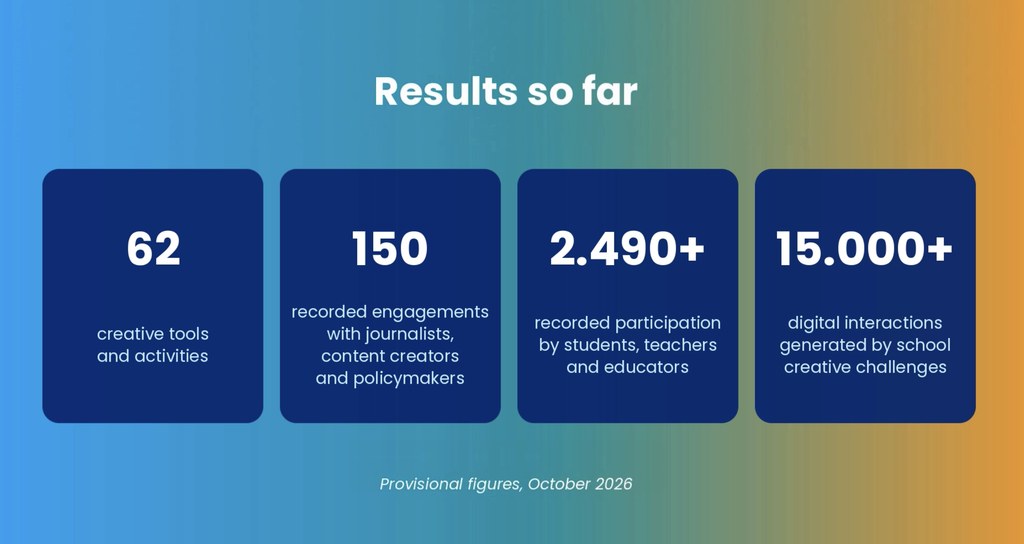
As of October 2026, provisional monitoring figures highlight the extensive reach and deep societal embedding achieved across the continent. Throughout the project lifecycle, NEUROCLIMA generated over 20,000 total interactions across all activities. This widespread outreach successfully connected with 93 media professionals and content creators, alongside 59 regional and national policy experts involved in co-design and deliberation sessions. Furthermore, the initiative trained over 227 educators and teachers in transdisciplinary climate literacy, empowering more than 2,264 students and 1,645 active citizens to participate in school-based learning, grassroots workshops, and public dialogues. These efforts were further amplified by over 17,000 public votes and digital interactions in school creative challenges, complementing more than 150 high-level stakeholder engagements and 2,490 student and educator participations in specialized learning initiatives.
Looking Ahead: A Practical Toolkit Ready to Scale
NEUROCLIMA’s digital public infrastructure, open datasets (including the knowledge graph, metadata records, and document summaries), and methodological toolkits remain fully active and available for use.
The consortium invites regional authorities, city networks, and mission partners to utilize these outputs, integrate NEUROCLIMA tools into ongoing European climate adaptation initiatives, and co-organize sessions to build climate-literate communities.
Explore the tools and access the platform today at hub.neuroclima.eu.