After two weeks of contentious negotiations and record overtime in Antalya, nearly 200 nations failed to reach a consensus agreement—leaving core disputes over fossil fuels and adaptation finance unresolved.
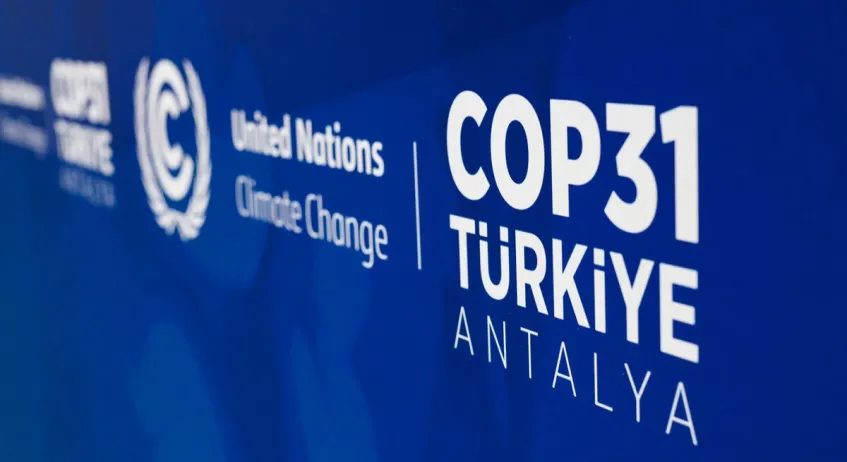
When the gavel finally came down in Antalya, Türkiye, on Sunday—more than 44 hours past its scheduled close, making COP31 the longest UN climate conference on record—nearly 200 countries left without a joint agreement. It marks the first time a UN climate summit has ended without a formal consensus pact since Copenhagen in 2009.
Following two weeks of gridlock and a desperate scramble in overtime, talks collapsed after the European Union, the United Kingdom, and vulnerable developing nations formally rejected a proposed “Antalya Pact” that omitted explicit commitments to transition away from fossil fuels and stripped out earlier targets to scale up adaptation finance.
COP31 President Murat Kurum acknowledged at the closing plenary that there was no consensus to adopt the proposed decisions, while UN Secretary-General António Guterres described the setback as “deeply disappointing,” warning that “there may be no consensus in the negotiating room, [but] there is no ambiguity in the science.”
Where the Negotiations Broke Down
COP31 was widely billed as the summit that would pivot the global community from high-level pledges to concrete implementation, particularly after a year marked by severe climate-linked disasters and an intensifying Super El Niño pushing global temperatures dangerously close to the 1.5°C threshold. Instead, negotiations fractured along familiar fault lines:
-
- The Fossil Fuel Impasse: A coalition of high-ambition countries and climate-vulnerable states insisted on reaffirming and operationalizing the transition away from fossil fuels. However, major oil- and gas-producing nations resisted binding language. A last-ditch compromise proposed by co-hosts Türkiye and Australia—attempting to center a global electrification target in place of a fossil fuel phaseout—failed to bridge the divide.
-
- The Adaptation Finance Gap: Developing nations entered Antalya seeking firm guarantees to triple annual adaptation finance to $120 billion. When successive draft texts diluted those commitments, vulnerable island states and least-developed countries warned they could not sign an agreement that left frontline communities without predictable funding.
Despite extending talks well into Sunday afternoon, negotiators remained deadlocked over both mitigation ambition and financial accountability, forcing the presidency to close the plenary without a cover decision.
Climate adaptation, needed more than ever
Even in Antalya, observers noted a sharp divergence between state-level paralysis and action happening outside the main negotiating rooms. Across the summit’s parallel forums, municipalities, regional authorities, civil society groups, and researchers pointed out that climate impacts are accelerating regardless of diplomatic timelines—and that cities and communities cannot afford to wait for top-down treaties to protect their livelihoods.
This growing gap between slow multilateral diplomacy and urgent on-the-ground vulnerability highlights why local climate adaptation and behavioral resilience are needed more than ever.
When international consensus fails, the strength of Europe’s climate response rests heavily on informed citizens, agile municipalities, and the social systems that empower communities to adapt together. Over the past three years, the Horizon Europe-funded NEUROCLIMA project has worked across European schools, city councils, and newsrooms to address this exact challenge—developing open-access tools (such as LENS, BOT, LEARN, PLAY, and DELIBERATE) that bridge complex climate science and everyday decision-making.
On Wednesday, November 25, 2026, NEUROCLIMA and sister Horizon Europe project PRO-CLIMATE will convene policymakers, regional leaders, behavioral scientists, and journalists at the CSIC Brussels Office for their joint final conference, “From Behaviour to Policy: Closing Two Journeys in Climate Adaptation Research.” In the wake of Antalya’s deadlock, translating grassroots experience into actionable European policy has rarely carried greater weight.
If you work in Brussels institutions, or are a climate or sustainability expert, join us free by registering on the conference page: https://conference.pro-climate.eu/
EVENT INFORMATION:
 Wednesday, 25 November 2026 | 09:30 – 16:30
CSIC Brussels Office, Rue du Trône 62, Ixelles
#FREE REGISTRATION:  https://conference.pro-climate.eu/
Seats are limited—register soon!