By: POLIMI
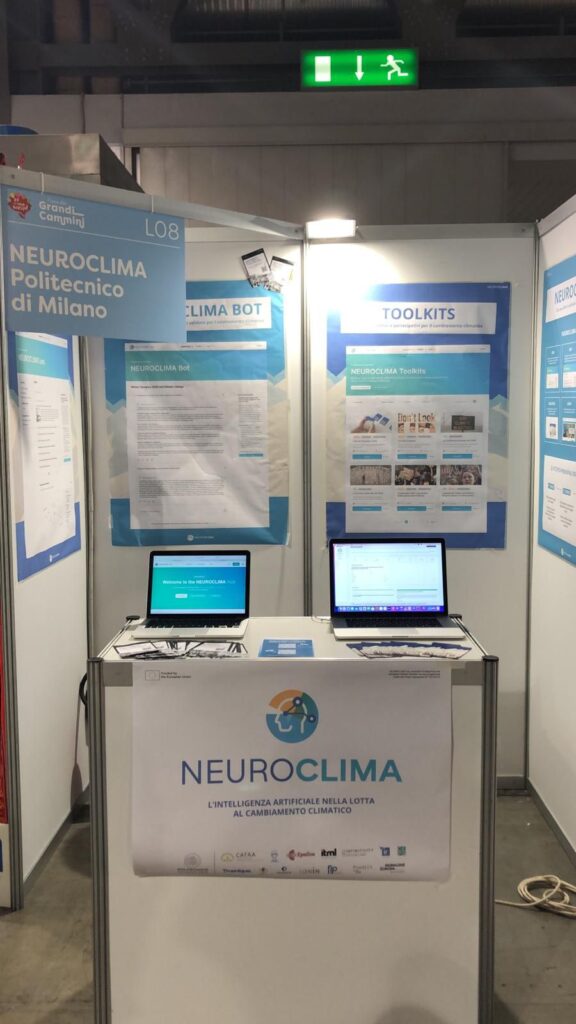
Anyone who’s spent an afternoon at the “Fa’ la cosa giusta!” fair knows it: it’s a place where you find yourself talking about sustainability with complete strangers as if you’ve known each other for years. It was right there, among crowded stands and school trips, that the NEUROCLIMA team at the Politecnico di Milano brought a seemingly simple experiment, yet capable of sparking unexpected conversations.
The idea was to see what happens when people are guided to reflect on climate not with a lecture, but through a short process: an initial survey, a game with ten information cards from the NEUROCLIMA toolkit, a reflection on the Deliberate platform, and then a final survey. Nothing complicated, but different enough from the norm to spark curiosity from those who happened to be at our stand.
The 10 cards and that blind choice, which, after all, isn’t just a choice
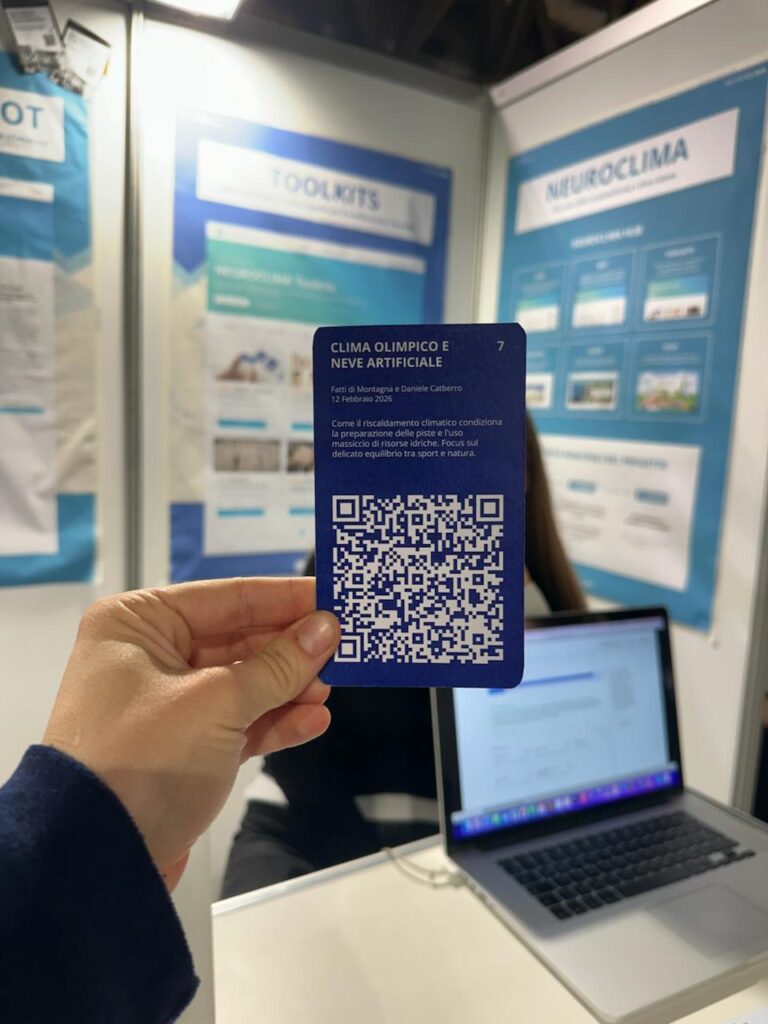
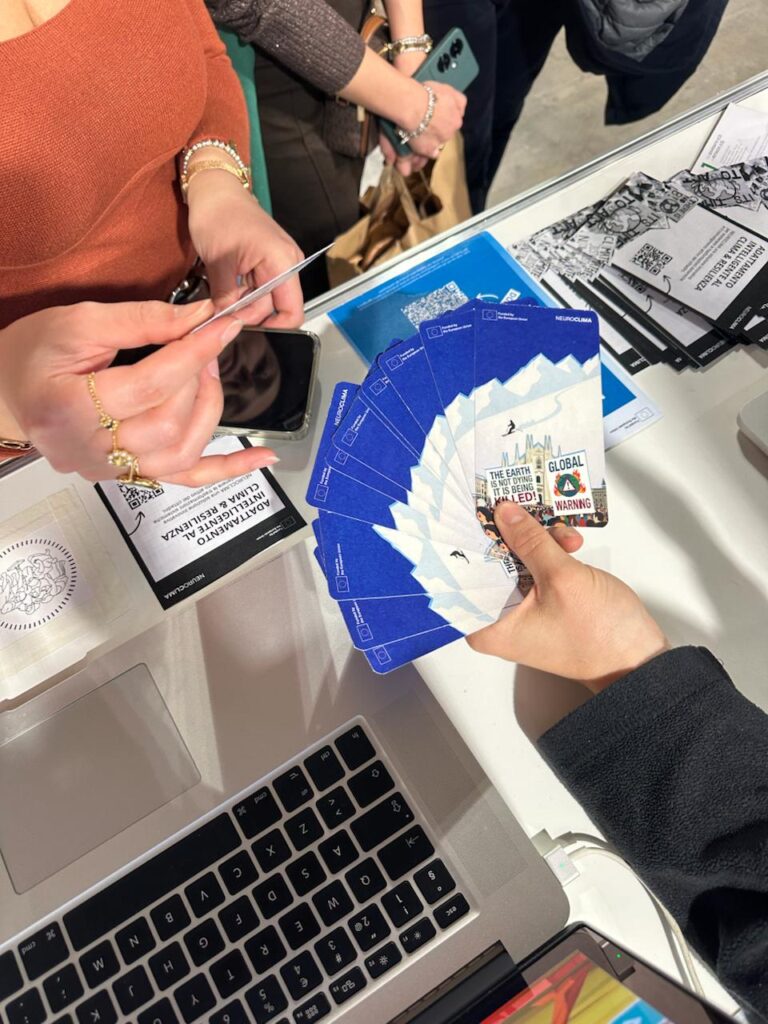
There were 10 playing cards on the table. Ten QR codes. Ten different informative articles, all revolving around the same topic: this year’s Winter Olympics and their impact on the climate.
The selection was completely random: participants drew a card without knowing what was behind the QR code. Yet, despite the randomness, many still took a moment before drawing a card, as if that tiny decision still mattered. Then they chose, and from there, a story unfolded.
Sometimes there were critical articles, like those from Greenpeace on the contradictions of the Games. Other times, videos, offering a more optimistic view, discussing sustainable heritage or green investments. There were journalistic analyses (Il Post, Avvenire, Euronews), mountain blogs that described what it means to play sports in a changing environment, and even political commentary on the Milan Cortina 2026 games.
The most interesting part: the comments
After reading the article or watching the videos, we asked participants to leave a comment on Deliberate, a service on the NEUROCLIMA Hub designed specifically to gather public opinion on topics related to climate change.
No votes, no right or wrong answers. Just a thought, even a brief one. This was the most revealing moment. Some wrote that they felt conflicted, some said they had never connected the Olympics to water consumption for artificial snowmaking, and some wondered why such large events are organized in places that are increasingly struggling to guarantee acceptable weather conditions. Some defended the Olympics, others openly criticized it. Everyone, however, understood that they were thinking in a new way. At the fair, it often happens that a short piece of content sparks a question that had never crossed your mind.
And afterward? The post-survey
Once the Deliberate activity was completed, participants returned to us. They filled out the second questionnaire, and here, the change was evident.
Many said they felt more informed than before, and others said they better understood the difference between “climate information” and “contextualized information,” that is, information tied to a real, concrete case, close to their experience.
And there were plenty of people who admitted they’d changed their minds on certain points or began to doubt their initial opinion. This is precisely where a project like NEUROCLIMA shows its value: it’s not about convincing you of something, it’s about making you think.
NEUROCLIMA isn’t just a European project. It’s a way to put complexity back at the center. And, judging from what we saw at the fair, people are much more willing to think about climate than we often think.