
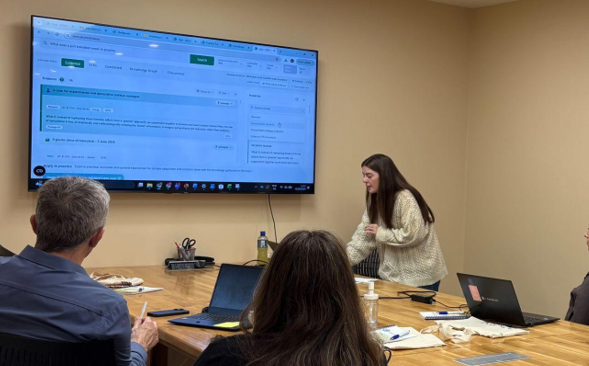
As part of the Irish activities within the NEUROCLIMA project, two stakeholder workshops were organised to explore how innovative digital tools can support citizen engagement and inform climate policy discussions in Ireland. The workshops brought together a diverse range of stakeholders such as members of local County Councils, representatives from the Green Party, Climate Pact Ambassadors, Regional Assembly teams, Eurofound, CPL and other organisations involved in climate action, sustainable development, research and community engagement.
The workshops focused on showcasing the project’s three core digital tools: Neuroclima Lens, Neuroclima Bot, and Neuroclima Deliberate. Participants were provided with an overview of the NEUROCLIMA project and the pilot activities undertaken across partner countries to date. Presentations explored the purpose and functionality of each tool, the technical features behind their development, and the methodologies used to ensure data reliability, transparency and user trust. Particular attention was given to how the tools support evidence-based decision-making, enhance access to climate information, and facilitate meaningful citizen participation in climate-related discussions.
Following the presentations, participants were invited to engage directly with the tools through self-guided exploration sessions. Attendees explored the Ireland Deliberation thread on the topic of “Just Transition” experiencing first-hand how the platform facilitates discussion, reflection and collaborative problem-solving around climate policy challenges.
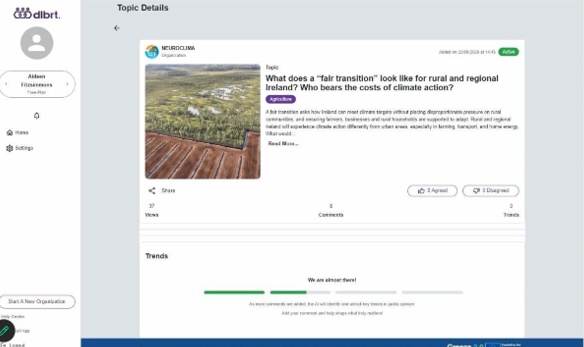
The deliberations generated a range of insightful contributions and highlighted several key concerns relating to fairness and equity in Ireland’s transition to a low-carbon economy. One participant noted that “a fair transition should mean that going green is not a privilege based on your income. Solar grants are a step in the right direction, but the bigger question is whether the level of support is enough to allow ordinary households to participate.” This reflected a broader discussion on ensuring that climate action measures remain accessible and affordable for all citizens.
Participants also discussed the distinct challenges facing rural communities across Ireland. One contributor commented that “tackling climate change shouldn’t hit people in the countryside harder than people in cities. Many rural families have no bus to take, live in older homes that are expensive to heat, and depend on farming for a living.” Discussions emphasised the importance of providing adequate support for home retrofitting, improving public transport infrastructure, and helping farmers transition towards more sustainable practices. Participants also stressed that large polluting industries should contribute fairly towards the costs associated with climate action.
A further theme that emerged was the need to ensure that communities directly benefit from the green transition. Participants highlighted opportunities for rural areas to gain employment, investment, and income from renewable energy developments such as wind and solar projects. There was also strong agreement that local communities should be meaningfully involved in climate-related decision-making processes from the outset, ensuring that people are consulted early, listened to, and empowered to influence policies that impact their lives.
The workshops provided valuable insights into Irish stakeholder perspectives on a just transition while demonstrating the potential of the NEUROCLIMA tools to support informed dialogue, foster citizen engagement and strengthen the connection between public opinion and climate policy development. Through both presentations and practical engagement with the platform, participants gained a deeper understanding of how digital deliberation tools can contribute to more inclusive and participatory climate governance.

