Across Cavan and its surrounding communities, NEUROCLIMA’s pilot workshops have provided early evidence of how young people understand, participate in and engage with climate action. By blending creativity, digital exploration and hands-on learning, the pilots have shown that climate education resonates most deeply when young people can connect with it personally, help shape its direction and recognise their own place within the wider climate story.
The pilots also highlighted that young people’s engagement is strongest when the adults around them such as teachers, youth workers, families and local communities are also equipped to support, encourage and continue those conversations beyond the workshop itself.
Young People learn best when Climate Action feels real
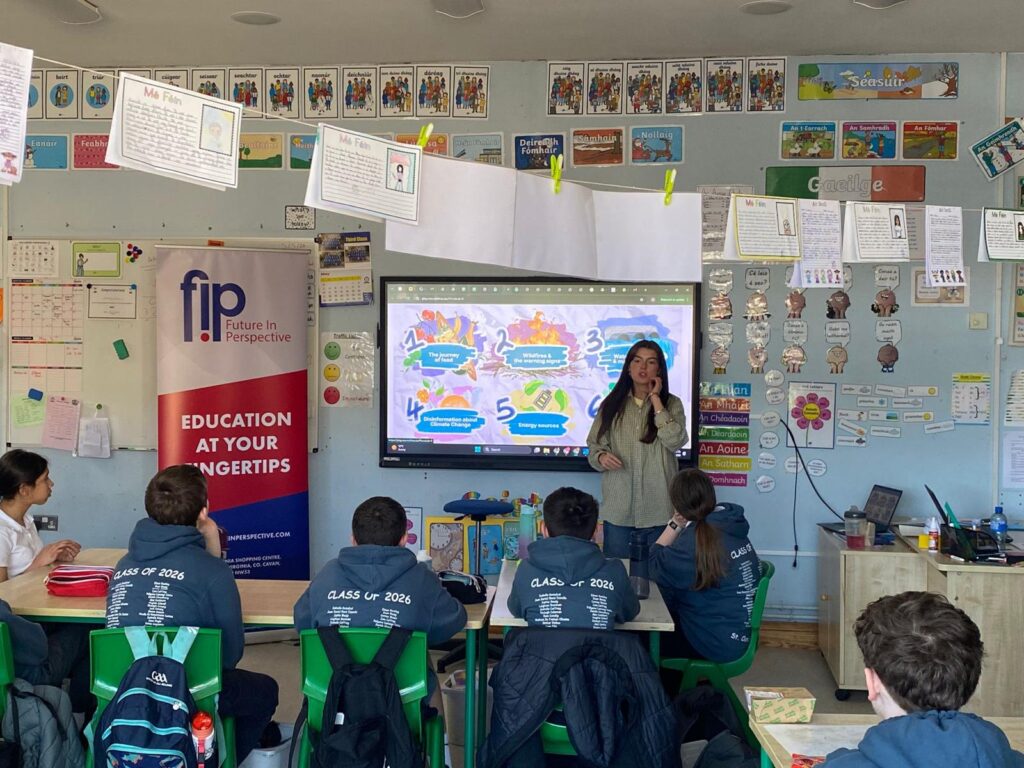
From Breifne College, St. Clare’s National School, St. Clare’s Secondary School and Carrigabruise National School, a common thread emerged and that was that many young people are eager to engage with climate issues when the learning environment feels real, relevant and imaginative.
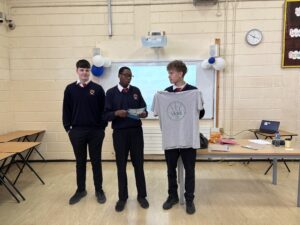
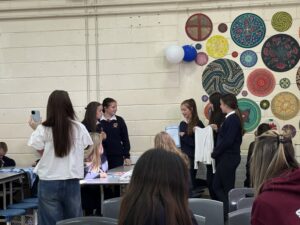
Secondary school students explored climate action and sustainable development through two-hour workshops that challenged them to rethink fast fashion, redesign brands for sustainability and express climate emotions through creative writing. The Fast Fashion Challenge sparked lively debate, while the Shark Tank redesign activity produced inventive and thoughtful pitches. One memorable group proposed transforming unwanted clothing into handmade teddy bears for sick children; a simple but powerful idea that captured the room and demonstrated how environmental thinking can also create social value.
Students also explored NEUROCLIMA’s digital tools with several choosing to log into the Bot during activities; curious to see how AI could support their ideas, answer questions and deepen their understanding. Rather than replacing discussion, the digital tools encouraged further exploration and gave young people another way to investigate climate issues and test their thinking.
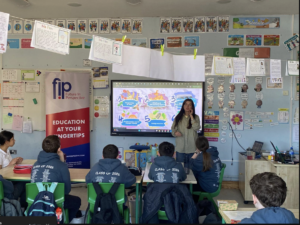
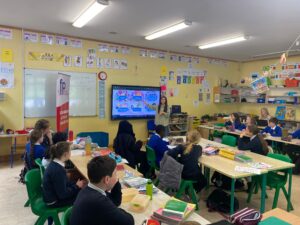
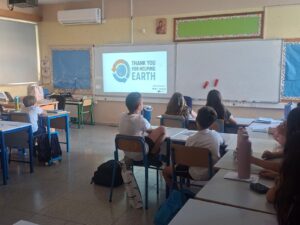
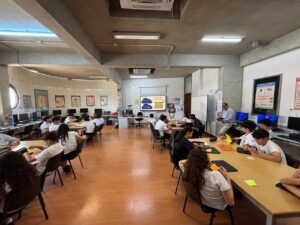
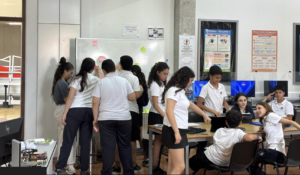
At St. Clare’s National School and Carrigabruise National School, younger pupils aged 8 to 12 years discovered climate action through the topic of food systems. Food Miles Bingo and the Food Passport transformed geography, sustainability and everyday choices into a playful learning experience alongside Neuroclima Play. One particularly memorable moment came when a third-class pupil, aged 9, proudly announced that her family had started buying local strawberries and honey because “they taste nicer and don’t have to fly from really far.” This simple observation reflected a growing understanding of food miles and demonstrated how climate learning can extend beyond the classroom into conversations and decisions at home.
Across all four schools, the pilots showed that young people are not passive recipients of climate education. When given opportunities to question, create, collaborate and solve problems, they engage enthusiastically and begin connecting global climate challenges with their own lives, families and communities.
Supporting Teachers and Youth Workers
While young people were central to many of the Irish pilots, NEUROCLIMA also recognised that lasting climate engagement depends on the adults who support and encourage these young people.
The educator workshop brought teachers together to explore NEUROCLIMA’s digital and non-digital tools. Participants experienced Lens, Bot, Learn and Play while exploring how creative learning methods, participatory activities and cinematherapy could enrich climate education. Many left with practical ideas for embedding climate resilience into everyday teaching and creating learning experiences that encourage curiosity, discussion and action.
Youth workers also participated in a dedicated workshop exploring how NEUROCLIMA aligns with Ireland’s National Youth Strategy. Discussions highlighted how climate action can be integrated into youth programmes, not as an additional topic, but as part of wellbeing, active citizenship, community participation and future planning. Equipping youth workers with practical resources strengthens their ability to help young people develop confidence, resilience and a stronger sense of purpose in responding to climate challenges.
Extending Climate Learning Beyond the Classroom
The Irish pilot activities extended beyond schools into Community Learning Festivals across Cavan Town, Virginia, Belturbet, Cootehill and Cornafean. These events blended comedy, drama, environmental art, music, poetry, photovoice and conversations about food systems, biodiversity, energy and pollination.
An important insight from these pilots was the depth of engagement generated through creative and participatory activities. Climate-themed art, comedy performances and interactive discussions resonated strongly with participants, including young people, demonstrating how inclusive and expressive approaches can open new pathways into climate learning for people of all ages.
The enthusiastic response to Future In Perspective’s presentation on European climate adaptation initiatives at the Virginia Learning Festival provided another valuable insight. Participants across different generations already possessed a strong awareness of climate issues and welcomed opportunities to reflect on them together, ask questions and imagine how they could contribute to more resilient communities.
For many young people, these community events reinforced the messages they had explored in school while creating opportunities to continue conversations with parents, teachers and local residents. This helped position climate action not simply as a school subject, but as a shared community responsibility.
What the Irish Pilots Have Shown
NEUROCLIMA’s Irish pilots demonstrate that young people are ready to engage with climate action when learning is relevant, creative and connected to their everyday lives. Across classrooms, youth settings and community events, participants showed curiosity, imagination and a willingness to explore practical ways of contributing to a more sustainable future.
The pilots also demonstrate that meaningful climate learning does not begin and end in the classroom. When teachers, youth workers, families and communities reinforce those experiences, young people are more likely to build the confidence, knowledge and sense of agency needed to become active participants in climate action.
From the pupils at St. Clare’s and Carrigabruise National Schools tracking food miles, to secondary school students reimagining sustainable fashion, and young people participating in Community Learning Festivals, NEUROCLIMA is helping young people recognise that they are not simply learning about climate change but rather that they have an important role to play in shaping a more resilient future.