A Viking river cruise carrying 186 passengers ran aground this summer near Vidin on the Bulgarian bank of the Danube. The crew rationed food and water while local authorities organized an evacuation. It sounds like a crisis from fiction, but it wasn’t. The ship simply ran out of river. A stark illustration of how extreme climate conditions threaten navigation and safety across Europe.
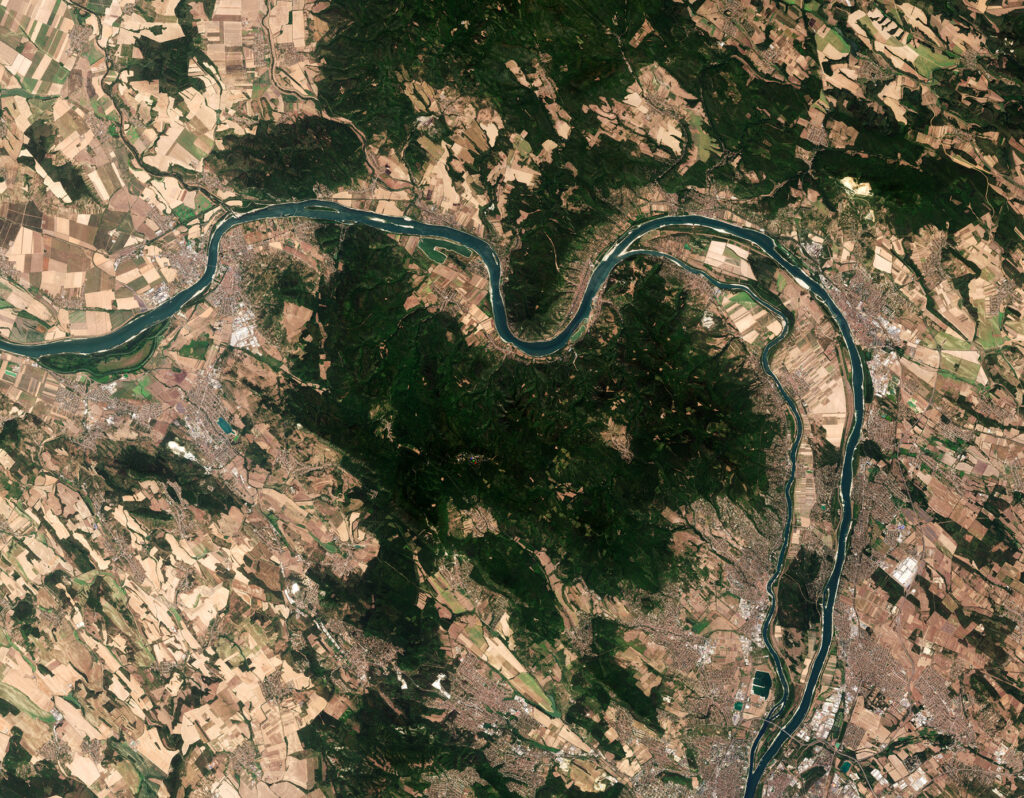
Across the Danube basin this August, the story repeats in quieter ways. Cruise operators dock far upstream of Budapest because the water is too shallow to reach the city center; cargo barges sit idle in Hungary, Romania and Serbia; the national water authority in Budapest recorded the river at just 23 centimeters; and engineers in Romania dig out sand from the riverbed and sink old, flat-bottomed boats to trap a bit more water so they can keep cooling the nuclear plant.
None of this is an isolated event. While headline-dominating wildfires across France, Spain, Greece, and the Balkans capture immediate attention, the Danube’s shrinking waterline is a quieter, equally urgent warning. Europe’s changing climate isn’t only visible in flames—it shows up in failing transport routes, stressed crops, fragile freshwater ecosystems, and riverside towns whose tourism economies dry up overnight.
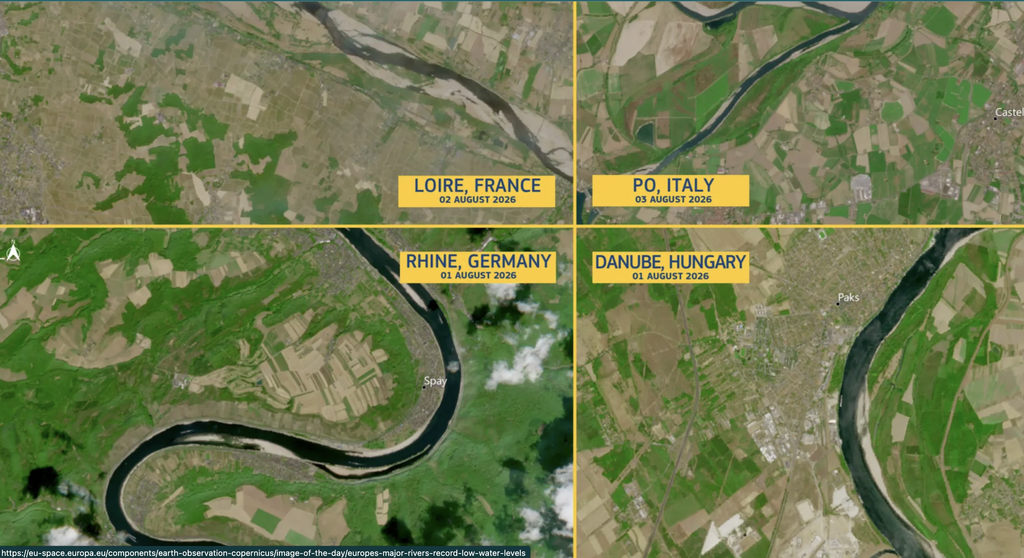
Scientists monitoring the basin are careful not to call any single dry summer proof of anything on its own. But when you add in relentless heatwaves, a dry spring, and drought warnings stretching from Spain all the way to Eastern Europe, the bigger picture is hard to ignore: Europe is warming faster than the rest of the world, and these low-water summers are turning into a regular habit.
Building climate resilience
Addressing this reality is the primary focus of NEUROCLIMA. Tracking how climate change hits different corners of Europe is not enough; the urgent task is helping local communities to prepare before rivers dry up, forest fires reach the tree line, or energy grids get overloaded.
To turn this vision into practical action, Neuroclima is blending groundbreaking technology, behavioural sciences, and creative and educational tools. The NEUROCLIMA Hub brings together powerful AI-driven tools alongside creative and educational resources designed to help communities build climate resilience across Europe.
The NEUROCLIMA’s framework and tools are being tested with dozens of communities across the continent, in collaboration with an extensive network of local partners – from educators to youth workers, local climate activist, environment experts, journalists, content creators and policymakers.
Explore the hub and test the tools at hub.neuroclima.eu.
To stay informed on project updates, new resources, and pilot developments as they unfold, subscribe to our newsletter..