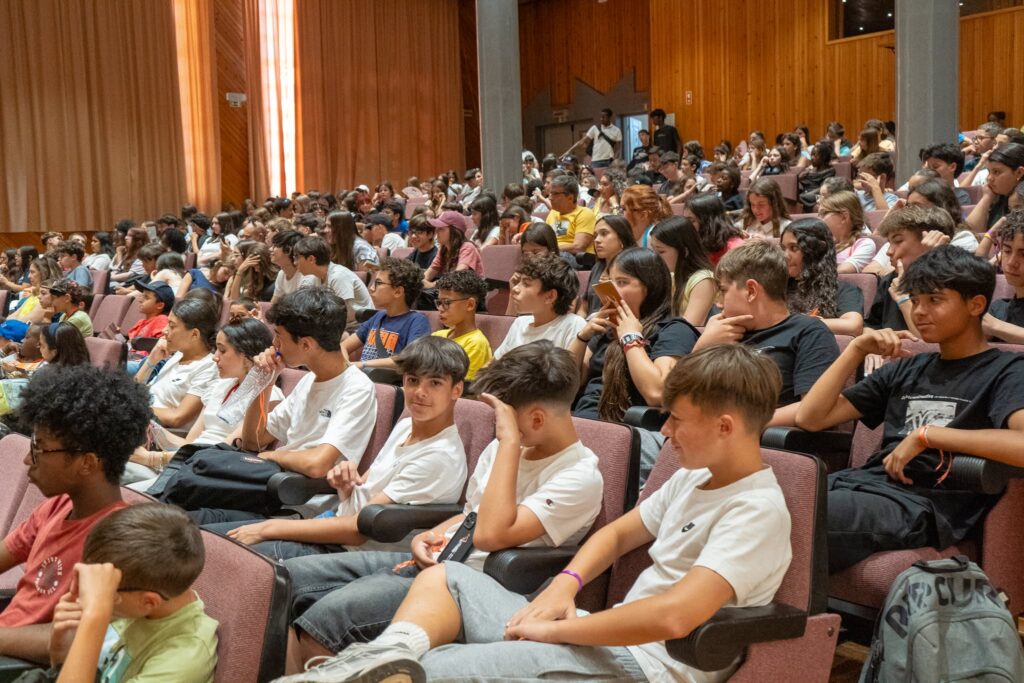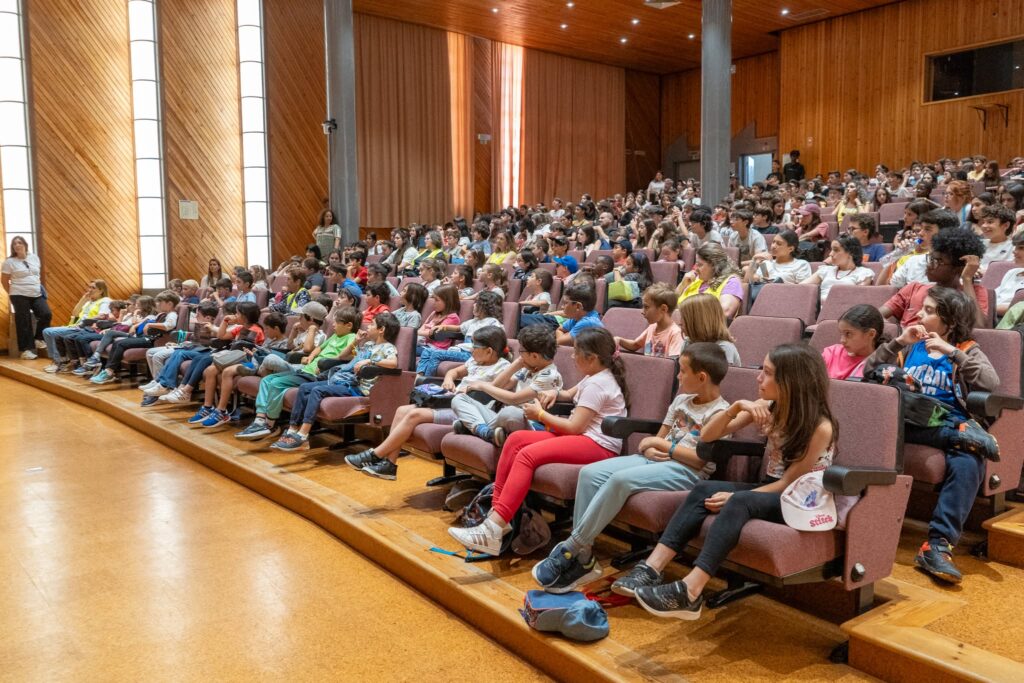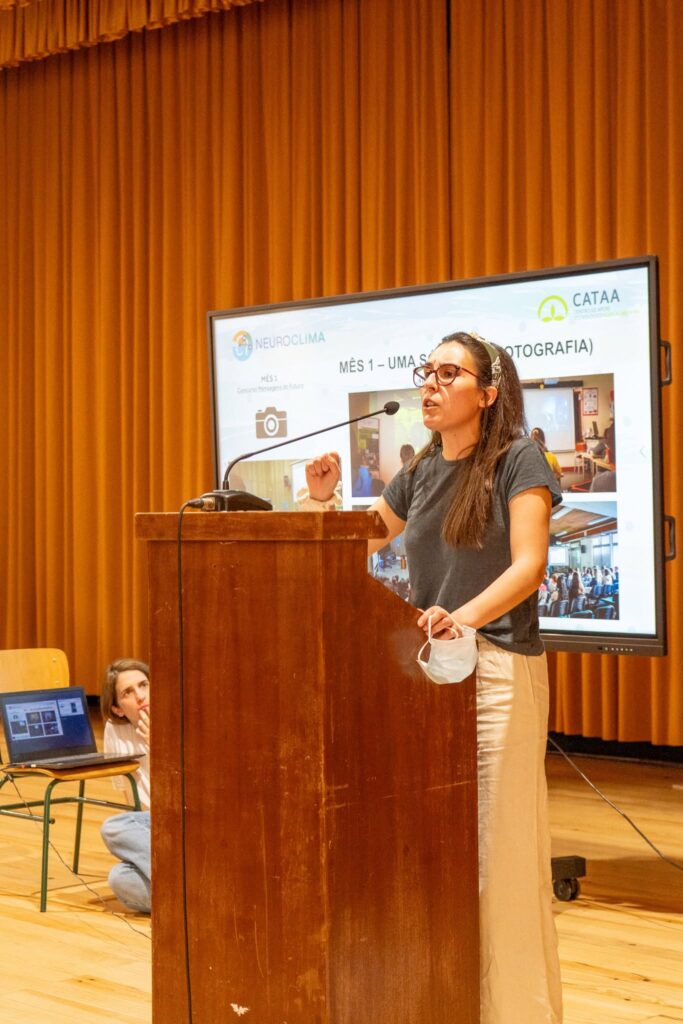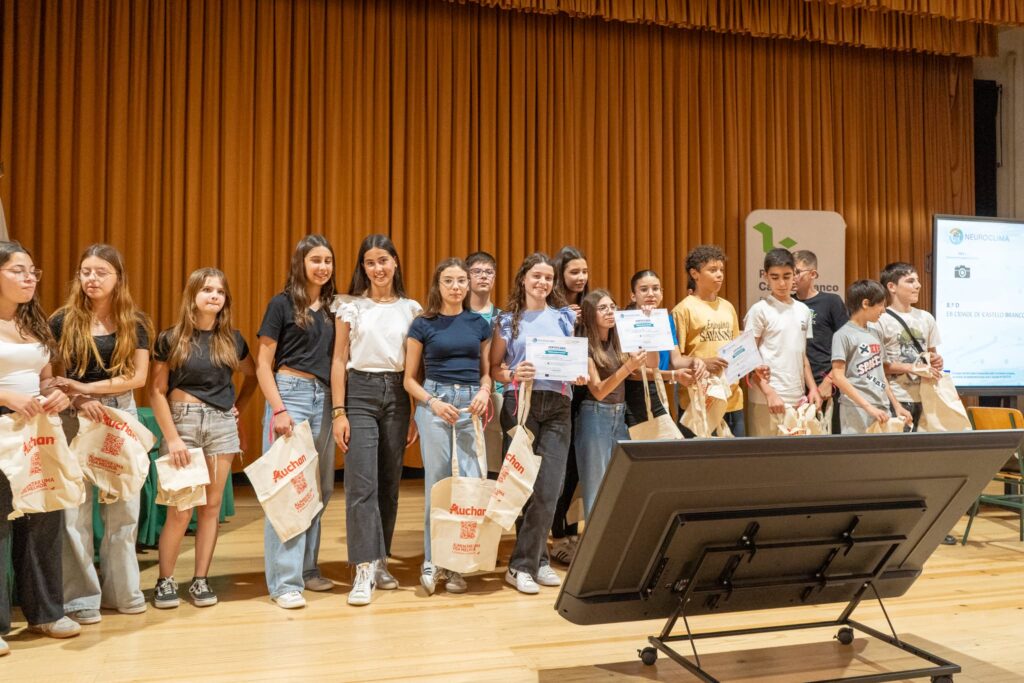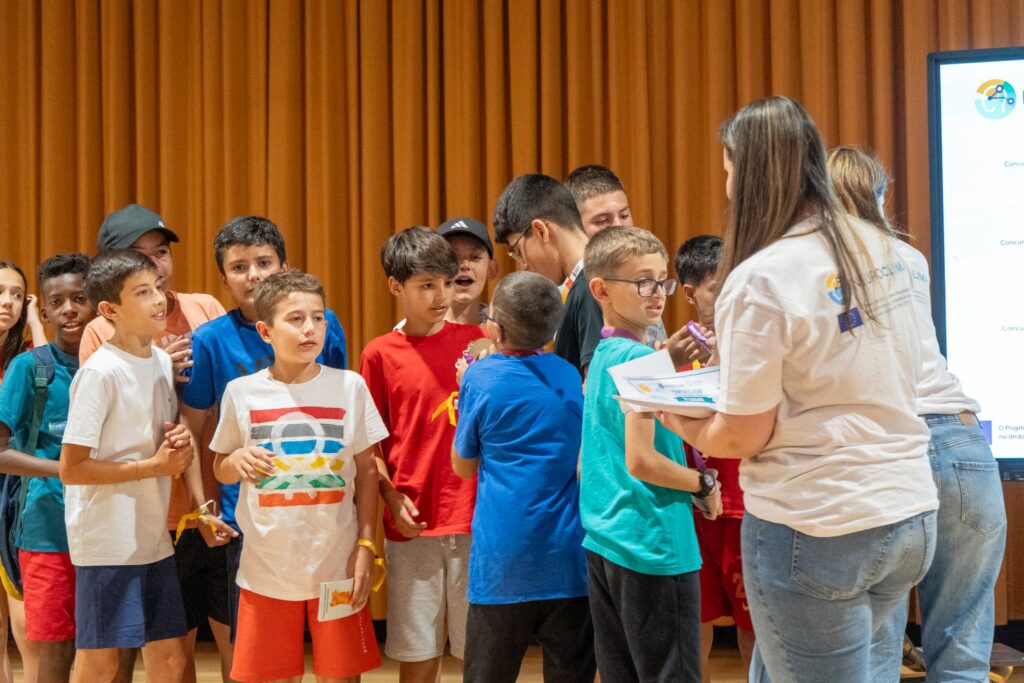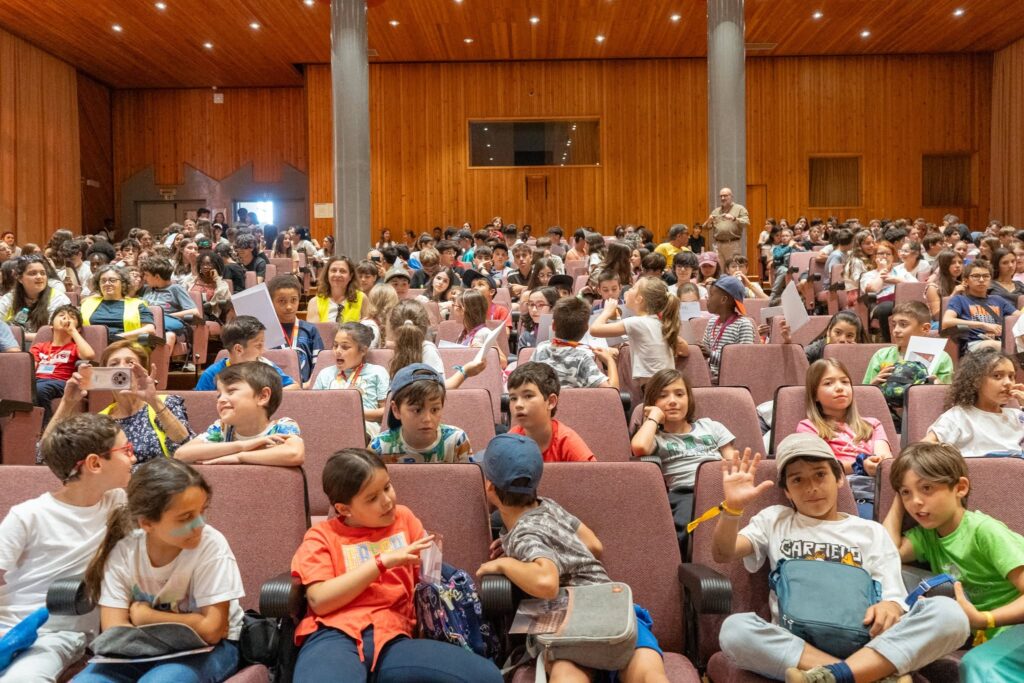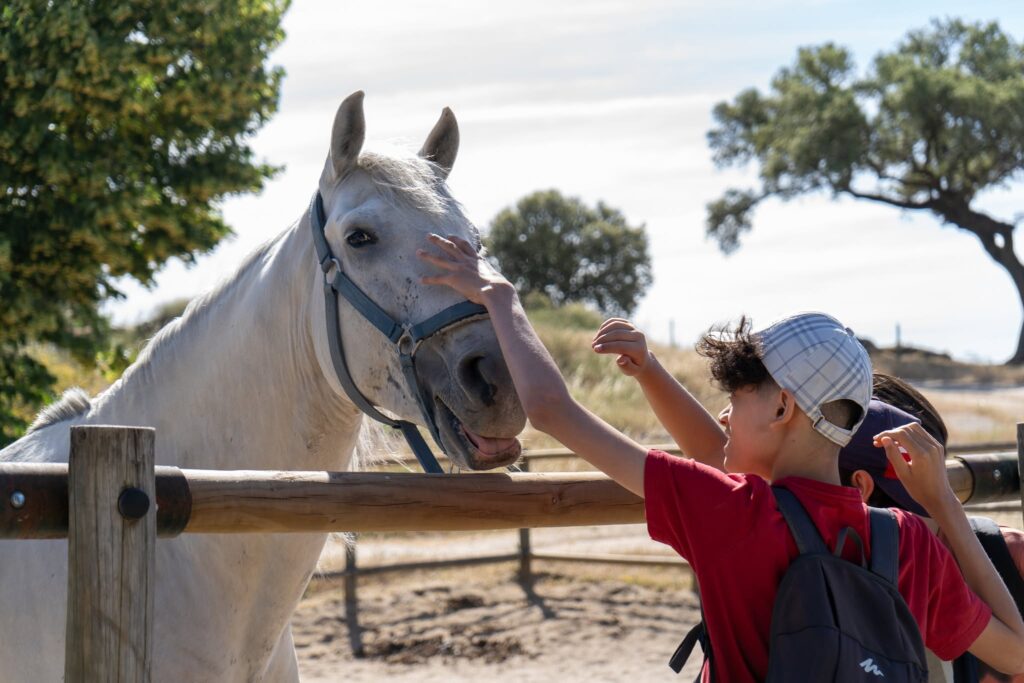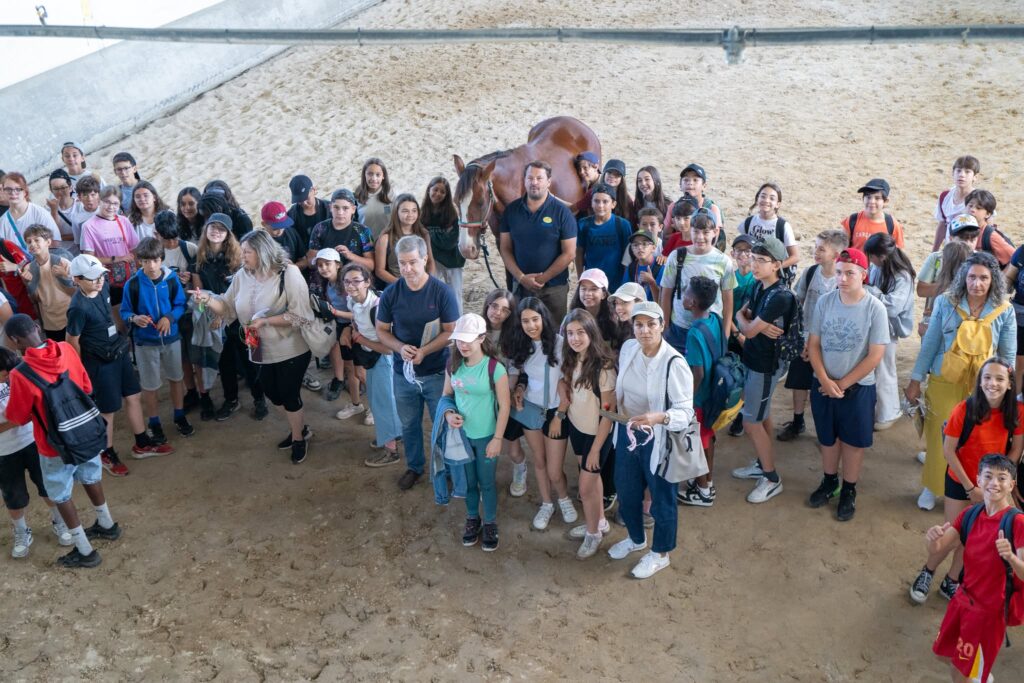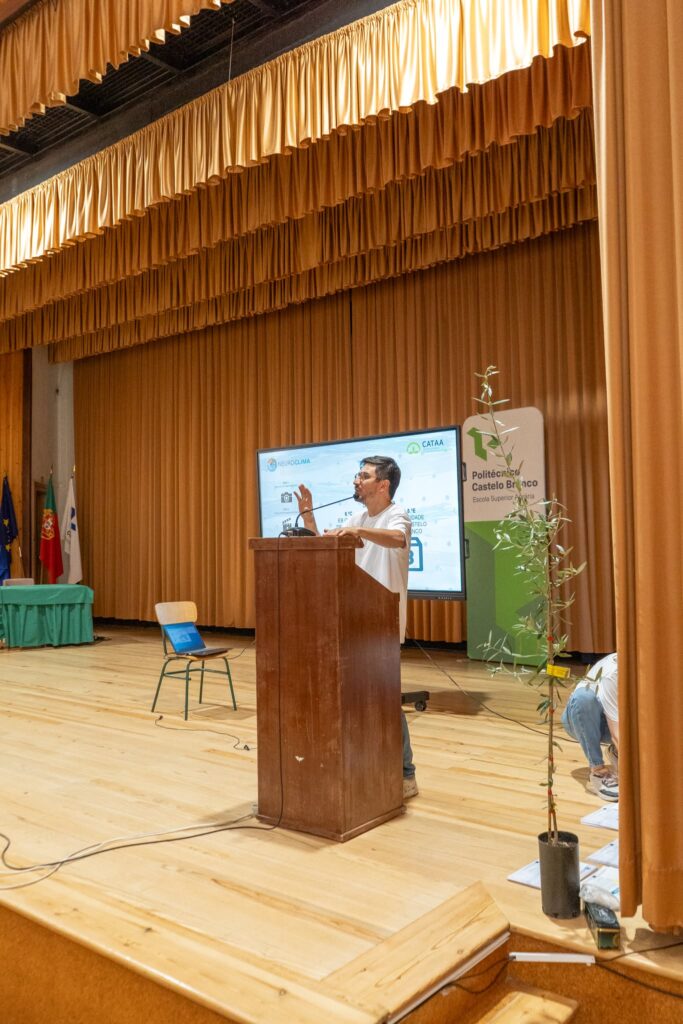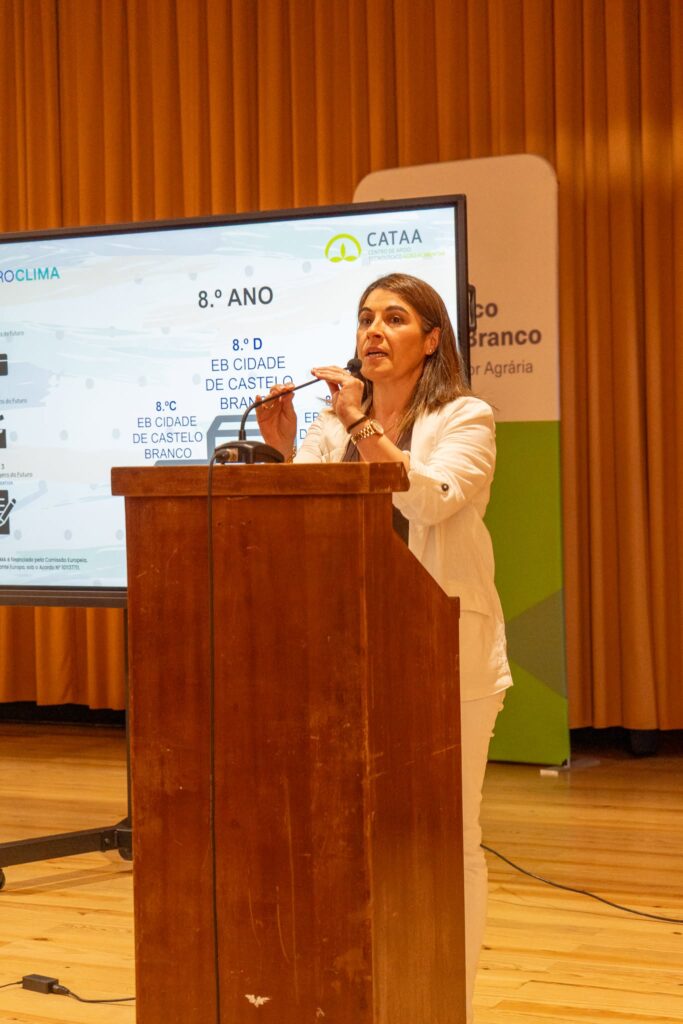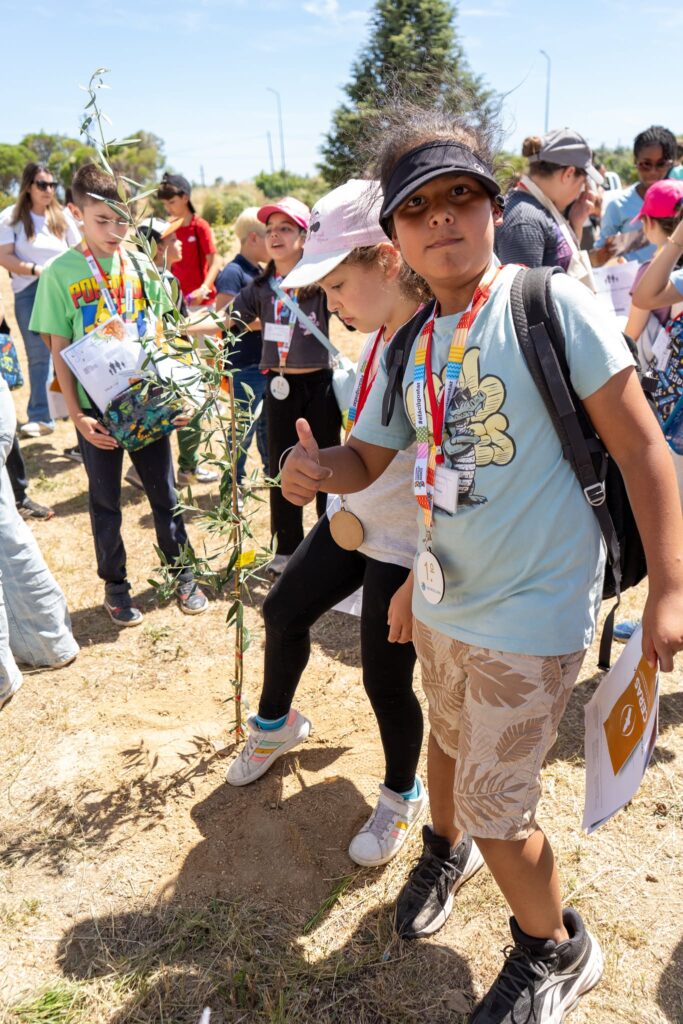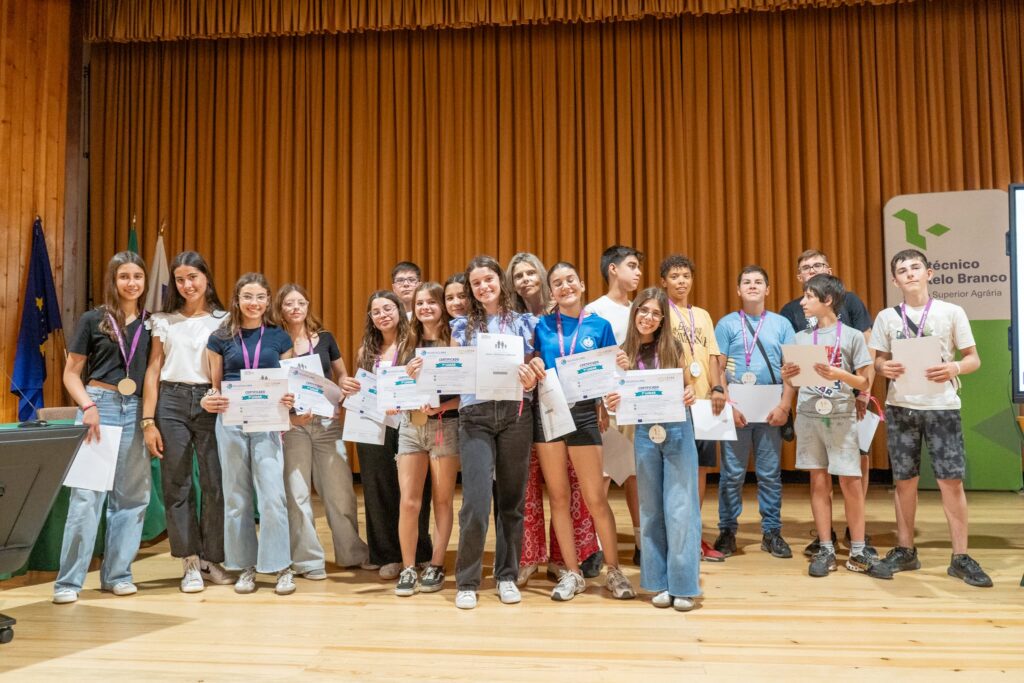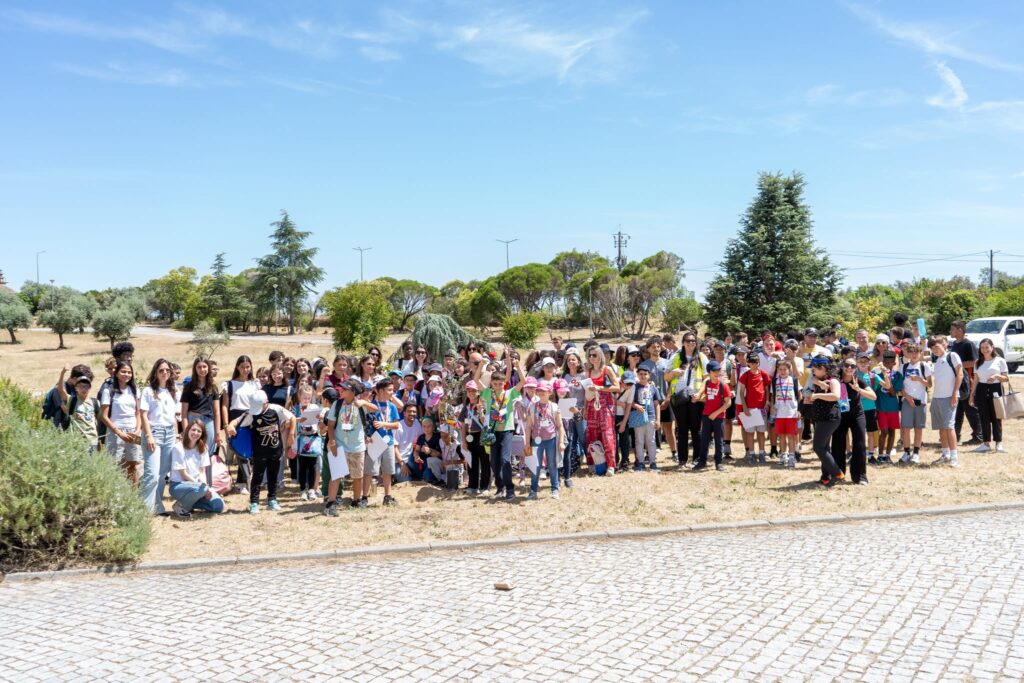
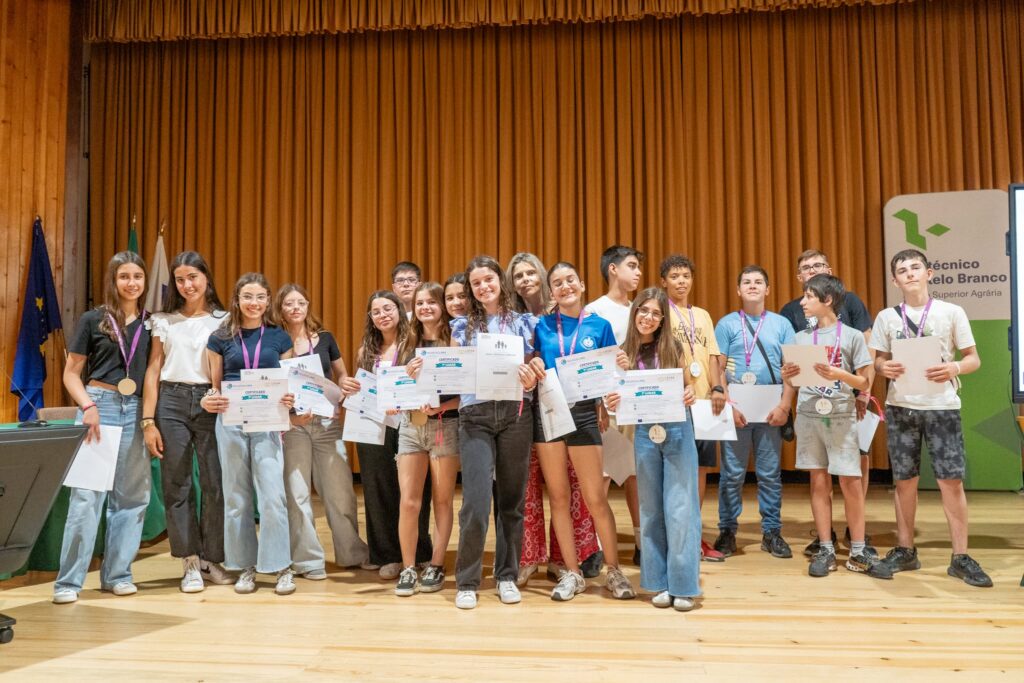
On 5 June—World Environment Day—the grounds of the Castelo Branco School of Agriculture (ESACB) were transformed into a vibrant living laboratory for environmental stewardship. Organized by NEUROCLIMA partner CATAA, the final showcase of the three-month-long school contest “Mensagens do Futuro” brought local youth out of the classroom and directly into the heart of rural ecology.
The choice of venue carried a poignant narrative of ecological restoration. Part of the Quinta da Senhora de Mércoles estate, where students spent the morning, was once a municipal landfill before undergoing comprehensive environmental rehabilitation. Guided by agricultural experts, students explored a landscape that embodies the core mission of NEUROCLIMA: proving that even severely degraded ecosystems can be restored to flourish once again.
Throughout the day, students spanning multiple age groups from local school clusters (Agrupamento Afonso de Paiva and Agrupamento de Escolas Nuno Álvares) took part in experiential learning modules, including:
- Hands-on games focused on hidden virtual water footprints in food and textiles, seasonal eating cycles, organic waste sorting, and biodiversity conservation.
- An immersive ecological trail for 8th-grade students designed around wildfire prevention, soil health, and aromatic plant identification.
- Collaborative workshops led by the Textile Museum (MUTEX), connecting local sheep farming to sustainable wool production and conscious consumer choices.
- Demonstrations on soil-less farming techniques alongside visits to the Wild Animal Recovery and Research Centre (CERAS).
Cross-Project Synergy and Community Support
The initiative showcased how regional partnerships amplify EU-funded research. The event drew active collaboration from InovCluster, who brought climate-focused digital games developed under the sister Horizon Europe project FUSILLI. Local municipal leadership, including representatives from the Castelo Branco City Council, engaged directly with the students to emphasize the importance of civic responsibility in climate adaptation.
The culmination of the three-month journey was built upon artistic critical thinking. Participating classes analyzed short films—such as Joana Cabete’s “O Incêndio”—and submitted entries across photography (“One Health”), video (“Food Waste and Composting”), and creative writing (“Between Drought and Fire”).
Looking Ahead to 2050
The celebration concluded with a symbolic act of long-term commitment. Students buried the Neuroclima 2050 Time Capsule, containing their written messages, artistic works, and visions for a climate-resilient planet. Sealed until World Environment Day 2050, the capsule was buried alongside a freshly planted Galega olive tree—an enduring regional symbol of hope, endurance, and deep-rooted resilience.
What began three months ago as a set of disruptive “messages sent from the future” ended with today’s youth writing their own answers for the generations to come. Through community-driven actions like Mensagens do Futuro, NEUROCLIMA continues to prove that empowering local communities is essential to building a sustainable European future.