On 25 June 2026, the Fábrica da Criatividade played host to an essential, grounded conversation on the immediate realities of climate change. Organized by the Centro de Apoio Tecnológico Agro Alimentar (CATAA), a member of the NEUROCLIMA consortium, the event titled “O clima já mudou. E nós?” (The climate has already changed. And us?) gathered dozens of researchers, policymakers, journalists, environmental advocates, educators, and local citizens. The goal was clear: dissect the challenges of regional climate action and discover how to communicate these urgent topics in a way that genuinely resonates with the public.
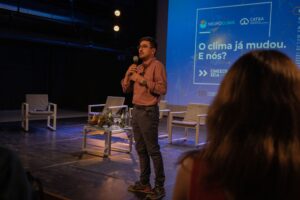
The session opened with an address by Leopoldo Rodrigues, Mayor of Castelo Branco, who grounded the global climate crisis in local reality, outlining concrete, sustainable measures already implemented within the municipality. Among them: the complete elimination of glyphosate and chemical herbicides in public spaces, the reuse of treated wastewater from local treatment plants for street cleaning and irrigation, and the expansion and reinforcement of selective biowaste collection.
Rodrigues stressed that a successful energy and ecological transition must protect productive agricultural soils and environmentally sensitive areas, noting that long-term territorial success relies heavily on involving citizens in these critical choices.
Bringing NEUROCLIMA to journalists and decision-makers
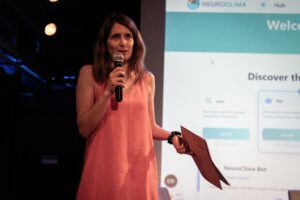
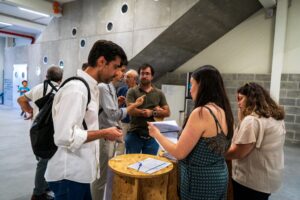
A major highlight of the day was the public presentation of the Lens and Bot, two of the key features of the Neuroclima Hub. Designed to streamline access to verified, reliable climate information, the tools were showcased to an audience of end-users outside the project consortium, including working journalists, educators, and local decision-makers.
The response to the digital tools was very positive. Several participants, including media professionals, highlighted the potential of the NEUROCLIMA tools to support the preparation of climate-related content and to facilitate access to reliable, curated information for public communication. Journalists in attendance also expressed interest in exploring the tools in future reporting.
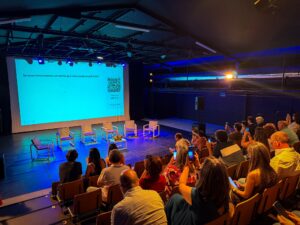
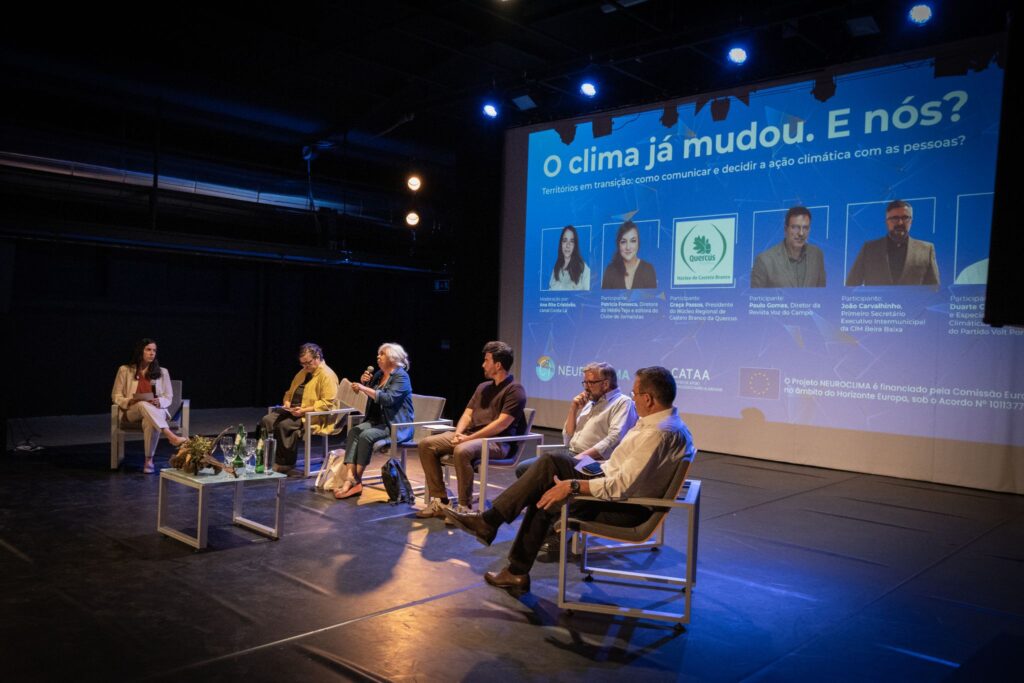
The core of the event featured a lively panel debate titled “Territories in transition: how to communicate and decide climate action with people?”. Moderated by Ana Rita Cristóvão, reporter at Conta Lá, the panel brought together diverse territorial and media perspectives. Participants included Patrícia Fonseca, Director of Médio Tejo and editor of Clube de Jornalistas; Graça Passos, President of the Castelo Branco Regional Group of Quercus; Paulo Gomes, Director of Voz do Campo magazine; João Carvalhinho, First Executive Intermunicipal Secretary of CIM Beira Baixa, and Duarte Costa, climate communicator and Co-President of Volt Portugal.
The panellists discussed journalism’s role in translating highly complex science into engaging language, the need for a stronger societal culture of prevention, and the vital role of agriculture as a part of the ecological solution.
A central consensus emerged: climate action cannot rest solely on individual shoulders. It demands structural change, collective responses, and robust public decision-making. Simultaneously, citizens must remain active participants—questioning, shaping, and localized ownership of solutions. In regions like Beira Baixa, where drought, wildfires, water scarcity, and agricultural preservation are lived experiences, climate discussion is never abstract; it impacts daily life.
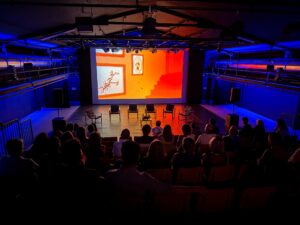
To wrap up the day, the event featured a special screening of environmental short films, organized as an extension of CineEco (International Environmental Film Festival of Serra da Estrela). This cinematic showcase added a vital emotional and visual layer to the seminar, proving that storytelling, art, and shared human experiences are just as crucial as digital tools and scientific data in mobilizing communities. The audience reacted warmly, with many visibly moved by the stories on screen.