
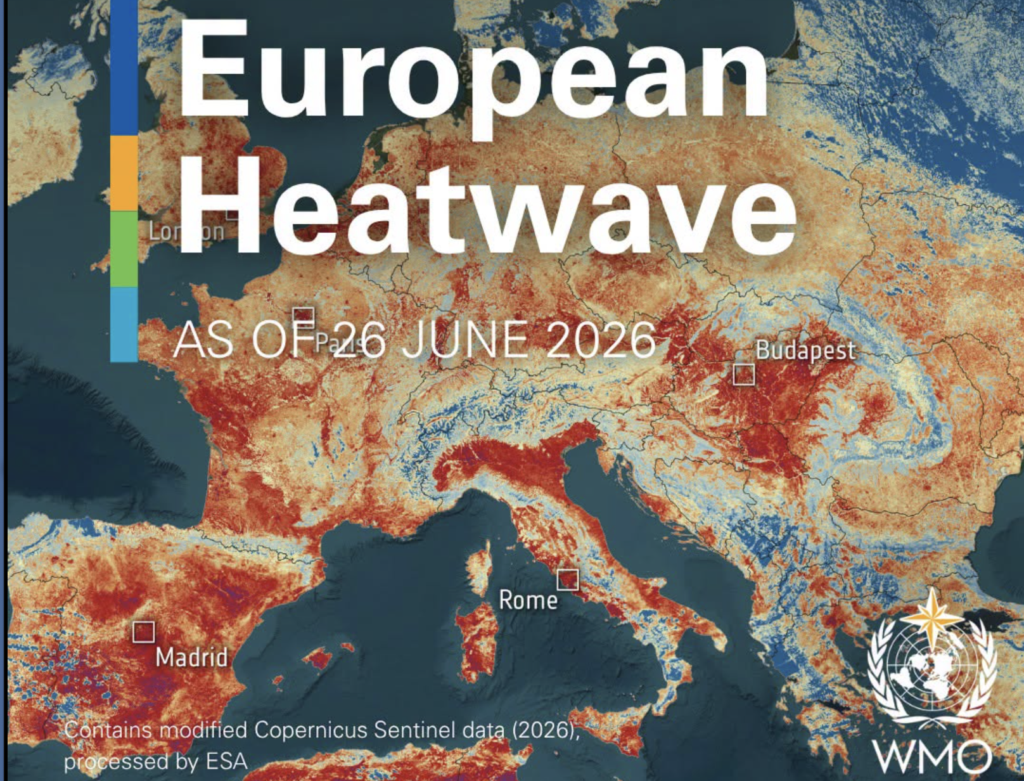
Europe closes June and enters July 2026 submerged in the peak of one of the most extreme heatwaves in its recent history. The intense heatwave gripping western Europe has set several unprecedented milestones: France experienced its highest-ever temperature, the UK broke its June heat records, and Spain registered its highest daily average since 1950. Climate change is driving up temperatures around the world – but particularly in Europe. It is the fastest warming continent, heating up twice as fast as the global average, according to the Copernicus climate service.
This intense thermal stress poses a severe menace to human health, energy grids, and water security. This crisis also represents the first widespread test of recent European climate adaptation and resilience policies. While Europe is structurally better equipped to face extreme heat than during the catastrophic disasters of 2003 or 2019, the current emergency is pushing these newly implemented defensive networks to their absolute limits.
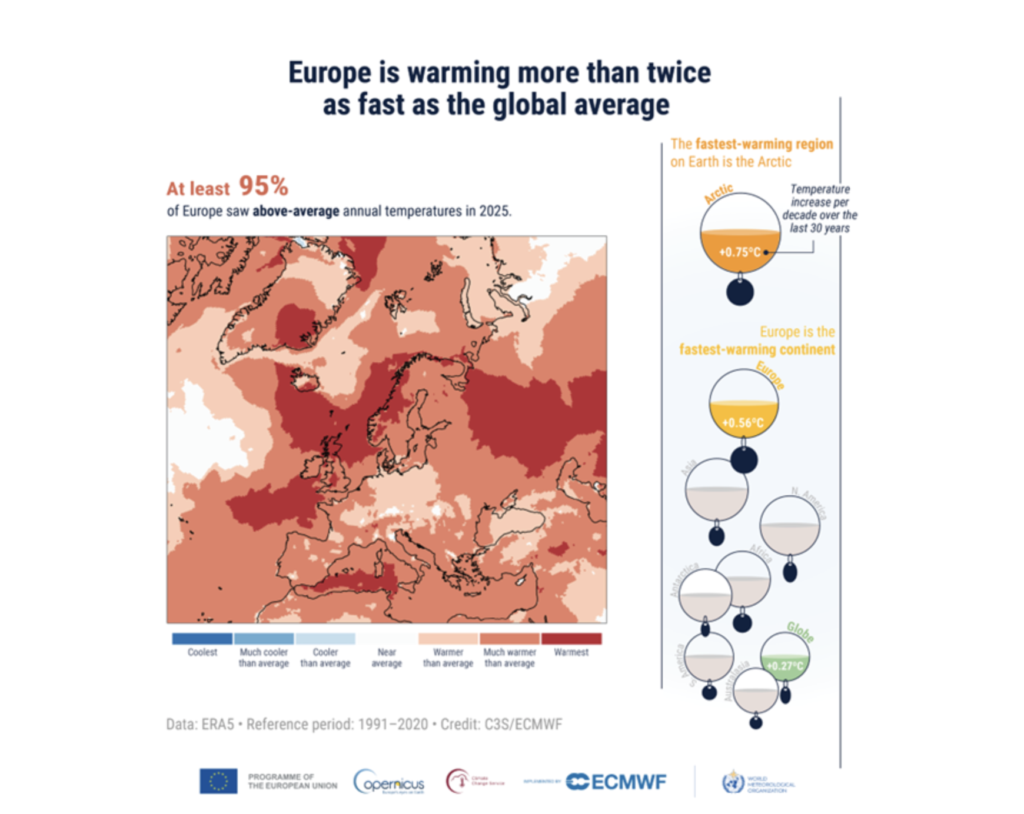
The implementation of the 2021 EU Strategy on Adaptation to Climate Change has transitioned from a policy framework into live, operational defense mechanisms on the ground. Across heavily affected member states, coordinated protocols are actively working to blunt the impact of the thermal peak, though they face immense operational strain.
1. Spain: Urban Infrastructure and the Limit of Climate Shelters
Rather than leaving citizens to face the urban heat island effect unassisted, municipalities have activated public networks to provide immediate thermal relief. In cities like Barcelona, networks of over 200 integrated climate shelters—including libraries, civic centers, and shaded parks—have been opened to guarantee indoor spaces cooled to safe temperatures. While these spaces protect vulnerable urban populations who lack domestic cooling, rising demand is straining local capacity, highlighting the long-term challenge of retrofitting aging European housing stock.
2. France: Proactive Outreach of Vulnerable Citizens
Modern European adaptation strategies place a premium on identifying and shielding socially vulnerable groups before a heatwave peaks, yet reaching everyone remains a systemic challenge. Under statutory frameworks like France’s Plan National Canicule—which triggered top-level Red Alerts across 58 departments during this wave—municipalities are utilizing vulnerability registers to conduct daily phone calls and door-to-door welfare checks on isolated elderly citizens. Public health agencies emphasize that while this structured outreach has successfully prevented massive emergency room overloads, the sheer volume of at-risk individuals during prolonged heatwaves tests the limits of municipal social services.
3. Greece: Labor Safety Regulations
Recognizing extreme heat as a profound labor hazard, updated European guidelines seek to move workers out of the direct line of exposure through clear regional mandates. In Greece, the Ministry of Labour enforces mandatory suspensions of all heavy outdoor manual work—specifically targeting construction, shipyards, and courier delivery services—between 12:00 and 17:00 on days when localized temperatures exceed 40°C. To balance economic reality, the state framework permits companies to adjust operations to early morning or night shifts. However, tracking compliance across decentralized gig-economy platforms and managing the financial impact on small independent contractors remain complex, real-time enforcement hurdles.
4. Germany: Neighborhood Health Guides
Under the national Heat Action Plan guidelines, the city of Cologne (Germany) launched targeted community-level initiatives aimed directly at families, parents with young children, and caregivers. The city utilizes a network of neighborhood health guides who conduct workshops in community centers. They train families to monitor their indoor environments using simple, color-changing indoor thermometers provided by the municipality. Families are taught the exact sequence of daily behavioral changes required when the thermometer enters the “amber zone” (e.g., banning the use of heat-generating household appliances like ovens during the day, shifting heavy cooking routines to the late evening, and implementing mandatory hydration intervals for children every two hours).
The unfolding events of this summer show that Europe’s protective shield is evolving, but its ultimate strength depends on full societal engagement. By pairing structural adaptation with deep behavioral insights, initiatives like NEUROCLIMA work to ensure that climate policies and human actions complement each other perfectly, creating a responsive, unified net of safety on the ground.
To stay informed on our latest research, project milestones, and the evolving landscape of climate resilience, we invite you to subscribe to the NEUROCLIMA newsletter.

