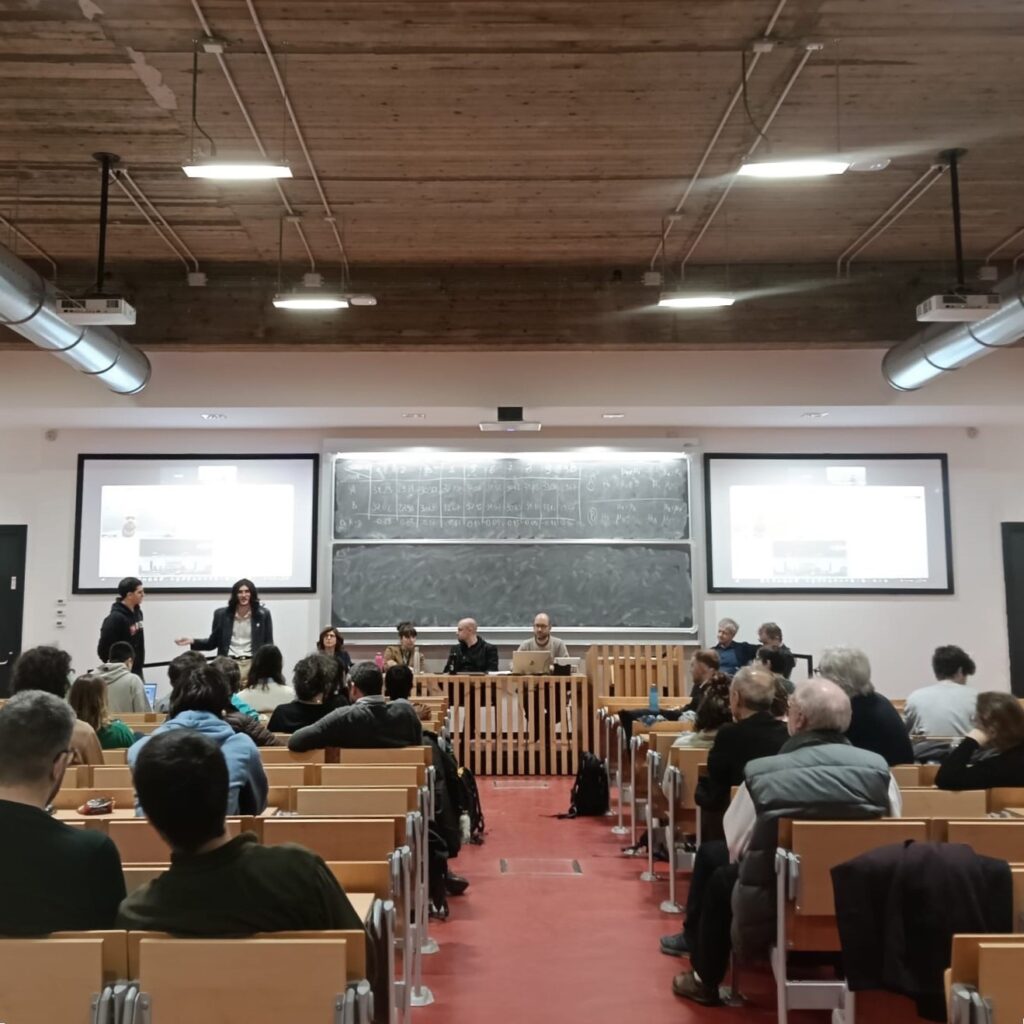
Climate policy has a translation problem. On one side sit an army of devoted scientists, sitting on mountains of data that almost nobody outside their field can fully understand. On the other sit the people who actually write the laws – under pressure, short on time, working from summaries several steps removed from the evidence itself. Closing that gap is one of the main goals of the NEUROCLIMA Project, co-funded by the European Union to foster climate resilience and adaptation across Europe. On 16 September, in a webinar room hosted by our partner CATAA in Portugal, the project took its next step toward doing so – one significant chapter in a story unfolding across six European countries.
A Question With No Easy Answer
The session opened with a deceptively simple question: how do you connect knowledge, communication, participation and decision-making – not as four separate boxes to tick, but as one working system?
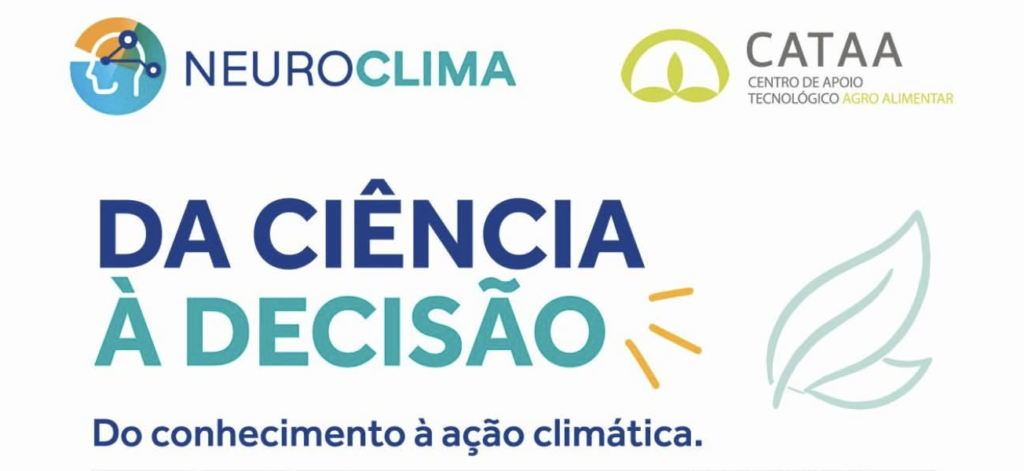
CATAA — the Centro de Apoio Tecnológico Agro-Alimentar — brought its own team together with specialists from Portugal’s Climate Change Agency (Agência para o Clima, ApC) for the first session in a new engagement cycle aimed squarely at the people who shape climate policy day to day. The session’s own title said it best: “Da ciência à decisão. Do conhecimento à ação climática“ — from science to decision, from knowledge to climate action.
Participants got hands-on time with two of the project’s core tools, NEUROCLIMA Bot and NEUROCLIMA Lens, testing how they hold up where it actually matters: cutting through dense or conflicting information, and helping a decision move from paper to practice faster.
Building climate resilience across Europe
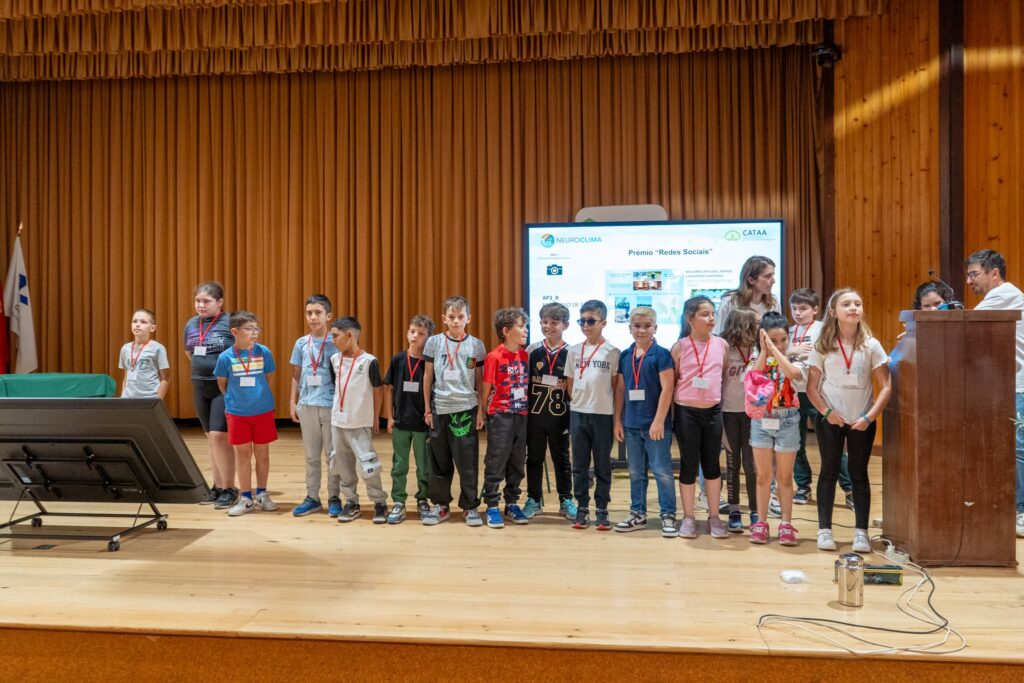
CATAA has spent the past several months coordinating the ambitious NEUROCLIMA’s local pilots across six European countries and leading their own activities in Portugal. In the Castelo Branco region, the main focus has been rural ecosystem vulnerability. Its “Messages from the Future” campaign engaged over 6,000 citizens and hundreds of students in activities with participation of scientists, writers and photojournalists to map how forest fires, drought and food security threats interlock. This pilot allowed hundreds of students to explore regional agriculture through a One Health lens that treats planetary and human health as one integrated story.
Just weeks ago, CATAA tried something totally different. In the small community of Taberna Seca, CATAA’s team sat twenty six- and seven-year-olds down across a table from local elders — no slideshows, no lectures, just old photographs and a handful of questions: How did you get to school? Where did you collect water? What did you grow in your garden? The answers, carried across a single lifetime of change in water, land and season, did more to make climate change tangible than any chart could. Each group left a written message hanging from a specially built tree at the Centro Social – a quiet monument to a conversation that outlasted the afternoon. Nearby, older children watched wordless short films about humanity’s relationship with nature, then talked through what they’d choose to do differently.
Building local resilience
Portugal is far from alone on the exciting endeavour to bring NEUROCLIMA’s framework and tools across Europe. In the Italian Alps, in the village of Cevo, Politecnico di Milano has been helping a community still marked by Storm Vaia turn environmental trauma into civic resilience. In Ireland’s County Cavan, pilot teams have swapped technical lectures for gamified workshops and community festivals tackling fast fashion and food supply chains. In Cyprus, partner NEUROCLIMA has been using cinema and storytelling instead of textbooks to help students navigate climate anxiety and turn it into local action. And in Brussels, Greece and Portugal, journalists and content creators have been putting the NEUROCLIMA Hub’s tools through their paces.
Two threads run through all NEUROCLIMA’s pilots: one mobilising students, educators and communities to build grassroots climate literacy; the other engaging journalists, communicators and policymakers to strengthen how climate risk gets reported and governed.
Why This Matters
The climate transition doesn’t usually stall for lack of science. It stalls in the handoff – between a research finding and a policy line, between a community’s memory and a decision-maker’s desk. NEUROCLIMA is betting that this handoff can be crossed – not necessarily with more data, but with stronger connective tissue between citizens, science, communication and public decision-making. Through the NEUROCLIMA’s pilots, that bet is already paying off: a child listening to a grandparent’s memory of the land, a policymaker testing a tool built to sharpen their next decision, an educator sharing and creating new knowledge with all kinds of creative tools… The definitive proof that the gap can close.
One conversation at a time.
This was session one. The dialogue has only just started.